
Category: HEALTH

  • Choosing the Best Gym Shoes to Avoid Common Training Injuries

    Choosing the Best Gym Shoes to Avoid Common Training Injuries

    Many lifters unknowingly risk severe joint damage by wearing soft, cushioned running shoes while performing heavy squats and deadlifts. According to expert podiatrists, flexible running midsoles deform under heavy loads, causing foot instability, ankle collapse, and harmful spinal misalignment. Investing in the best gym shoes with flat, non-compressible soles is critical to stabilizing your form, protecting your joints, and elevating your strength gains safely.

    Swapping dedicated weightlifting footwear for cushioned running sneakers is the primary root cause of acute ankle strain and chronic lower back pain among strength enthusiasts today. When you execute heavy compound movements like squats or overhead presses, your body requires a unyielding, stable foundation to transfer force efficiently into the floor.

    Unmasking the Mistake: Why Running Shoes Undermine Your Lifting Safety and the Need for the best gym shoes

    best-gym-shoes-running-shoe-midsole-compression
    Soft running midsoles collapse under heavy barbell loads.

    The fundamental mechanical flaw of wearing running footwear inside the weight room stems from purpose-driven engineering differences. Running sneakers feature thick Ethylene-Vinyl Acetate (EVA) or TPU foam midsoles specifically calibrated to absorb forward kinetic impact. When placed under vertical heavy barbell loads, these soft air pockets squish unpredictably, turning your firm lifting surface into a trampoline.

    The Dangerous Illusion of Soft Comfort in the Free Weight Zone

    Lifting heavy iron while standing on thick foam creates immediate lateral instability across all foot joints. As you descend into a heavy squat, the weight forces the foam cushion to compress unevenly, disrupting your natural balance and center of mass.

    Biomechanical Differences Between Forward Propulsion and Vertical Load Compression

    Forward running requires shock absorption at heel strike followed by energetic toe-off propulsion across the sagittal plane. Vertical strength training requires zero kinetic dampening so that mechanical energy travels directly from your skeletal system straight down into the firm floor.

    Gym Rat Experience: Loss of Floor Grip and Arch Collapse During Heavy Reps

    Athletes attempting heavy sets in running sneakers frequently report a terrifying sensation of foot rolling and midfoot collapse. Without a rigid heel counter, the longitudinal arch caves inward, forcing your toes to claw frantically inside the toe box just to keep you upright.

    Upgrading your workout footwear is an essential step toward protecting your spine, strengthening your ankles, and lifting heavier weights safely. Make the switch to the best gym shoes today to safeguard your joints and elevate your training performance for years to come.

    Ri

    Direct Damage to the Ankle Joint and Posterior Chain During Squats and Deadlifts

    When your foot foundation tilts off-center, the kinetic chain above it suffers severe alignment breakdowns. The ankle joint, forced to compensate for a mushy sole, undergoes extreme lateral shear stress that compromises structural integrity during peak muscular exertion.

    best-gym-shoes-squat-alignment-side-view
    Rigid footwear maintains alignment through the entire posterior chain.

    Ankle Instability Caused by Deformed EVA Foam Under Pressure

    Under three hundred pounds of axial pressure, soft EVA soles flatten unevenly toward the medial side. This forces your calcaneus into excessive eversion, stretching lateral ankle ligaments beyond their safe range of motion and increasing acute strain risks.

    Risks of Ankle Sprains, Ligament Strain, and Loss of Ground Force Transmission

    When footwear deforms under load, kinetic energy dissipates sideways rather than driving the barbell upward. This mechanical leak reduces total force output while exposing delicate joint capsules and collateral ligaments to severe hyper-mobility trauma.

    Podiatrist Insights: How Incorrect Footwear Triggers Spinal Misalignment and Injury

    best-gym-shoes-podiatrist-evaluating-foot-posture
    Podiatrists recommend rigid soles to preserve foot tripod mechanics.

    Medical specialists in podiatric sports medicine consistently warn against running shoes on the lifting platform. A squishy shoe destabilizes the heel bone, which instantly cascades upward through the tibia, knee joint, hip socket, and spinal column.

    Medical Analysis of the “Sponge Effect” in Soft Midsoles

    Podiatrists describe soft running midsoles as a dampening sponge that destroys natural neurological proprioception. When your brain cannot feel a firm surface through the plantar fascia, stabilizer muscles overcompensate, creating chaotic muscular recruitment patterns across your lower extremities.

    Disruption of the Stable Foot Tripod Structure Under Load

    Human foot stability relies on a three-point contact structure: the calcaneus, the first metatarsal head, and the fifth metatarsal head. Soft shoe cushioning collapses this tripod, causing the foot to roll inward and shifting your center of pressure dangerously forward.

    Kinetic Chain Energy Dissipation From Floor to Skeletal System

    When pushing against a spongy surface, a significant portion of force is absorbed by the shoe material rather than moving the barbell. This energy loss forces your lower back muscles to pull harder to complete the upward movement, placing unnecessary stress on the spine.

    Read more: Do You Meet the Standard Mile Run Pace by Age to Evaluate Your Cardiovascular and Respiratory Health?

    Postural Distortions and Severe Risks to the Lumbar Spine

    As the ankle rolls inward, the tibia rotates internally, pulling the knee inward (valgus collapse) and tilting the pelvis forward. This biomechanical collapse forces the lower back to arch excessively to keep the chest upright under heavy loads.

    best-gym-shoes-deadlift-flat-sole-setup
    Flat soles keep the pelvis neutral and spine protected during deadlifts.

    Anterior Pelvic Tilt and Compensatory Force Disruption Under Heavy Barbell Loads

    Anterior pelvic tilt during deep squatting compresses the facet joints of the lumbar vertebrae. This artificial alignment shift alters how force distributes across your spinal discs, making even lighter weights feel unstable and dangerous.

    Herniated Disc Risks and Premature Joint Wear From Asymmetric Pressure

    Uneven force distribution across intervertebral discs dramatically increases the risk of acute disc herniation. Over months of heavy training in soft shoes, this repetitive asymmetric loading causes micro-trauma, wear, and chronic lumbar strain.

    Technical Standards for Evaluating Modern best gym shoes

    best-gym-shoes-flat-lay-gear-display
    Specialized weightlifting shoes feature flat outsoles and solid heel support.

    Identifying authentic high-performance lifting footwear requires understanding key structural features. Dedicated lifting shoes replace soft foam with high-density TPU, dense rubber, or wooden heel blocks that remain completely unyielding under hundreds of pounds.

    [ruby_related heading=”More Read” total=5 layout=1 offset=5]

    Core Criteria Defining the best gym shoes for Strength Training

    To safeguard your skeletal framework, functional footwear must satisfy strict geometric criteria. The primary goal is creating a flat, wide platform that grounds your feet securely into the floor surface.

    Heel-to-Toe Drop and Its Role in Optimizing Ankle Range of Motion

    Heel-to-toe drop refers to the height difference between the heel cushion and forefoot sole. Raised heels (15mm to 22mm) allow lifters with limited ankle mobility to achieve deep squat depth without rounding their lower back.

    Flat, High-Grip Rubber Outsoles with Zero-Compression Engineering

    The bottom rubber layer of the best gym shoes must feature a flat profile with sticky rubber compounds. This design ensures maximum surface contact area, preventing slips while maintaining a stable, solid feel throughout heavy lifts.

    Categorizing Specialized Training Shoes by Exercise Type

    Not all gym activities demand identical footwear specs; powerlifting, Olympic weightlifting, and general conditioning require tailored footwear designs.

    best-gym-shoes-barefoot-deadlift-shoes
    Zero-drop barefoot shoes maximize tactile floor contact during deadlifts.

    Barefoot/Zero-Drop Footwear: Maximizing Tactile Sensory Feedback for Deadlifts

    Zero-drop shoes place your heel and forefoot at identical heights off the floor, reducing the total distance the barbell must travel. This design allows your toes to splay naturally, maximizing balance and floor contact during heavy pulls.

    Olympic Weightlifting Shoes: Raised Hard Heels for Deep Squat Stability

    Olympic lifting shoes incorporate rigid TPU plastic or wood heels that provide a solid base during clean-and-jerk or snatch movements. This raised heel improves upright torso alignment, reducing forward lean and stress on the lower back.

    Transition Roadmap and Selecting the best gym shoes for Your Anatomy

    best-gym-shoes-fitting-and-selection
    Testing shoe width and heel lockdown ensures a secure, protective fit.

    Switching from cushioned running shoes to firm, supportive gym shoes requires a thoughtful adjustment period. Your feet, ankles, and calves need time to adapt to unyielding soles after relying on soft foam cushioning for years.

    Step-by-Step Testing Protocol to Choose the best gym shoes Based on Foot Shape

    Never buy training shoes based on appearance alone; exact mechanical fit determines whether a shoe protects or degrades your joints under load.

    Evaluating Wide Toe Box Space for Natural Toe Splay Under Load

    A proper lifting shoe features a wide toe box that lets your toes spread out under pressure. When your big toe splays fully, it engages the plantar fascia naturally, locking your foot arch into a stable, strong shape.

    best-gym-shoes-instore-squat-test
    In-store squat tests reveal heel stability and lateral support.

    In-Store Stability Test Protocol Before Purchasing Strength Footwear

    Always perform bodyweight squats and lunges when trying on prospective training shoes. Ensure your heel stays locked in place, the midfoot strap holds your foot securely, and the sole does not tilt or flex under weight.

    Adaptation Strategy for Long-Term Foot Health and Injury Prevention

    Transitioning immediately to firm zero-drop or weightlifting shoes for heavy training can temporarily strain tight calves and Achilles tendons if introduced too quickly.

    Progressive Stack-Height Reduction Plan for Plantar Muscle Adaptation

    Gradually reduce sole cushion thickness over four to six weeks rather than making a sudden jump. Start by wearing firm cross-trainers for lighter workouts before moving to rigid, zero-compression lifting shoes for heavy sets.

    best-gym-shoes-ankle-mobility-drills
    Ankle mobility mobility exercises help feet adapt to firm lifting shoes.

    Supplementary Mobility Drills for Ankle Flexibility and Arch Strengthening

    Pair your new footwear with targeted mobility drills, such as knee-to-wall ankle stretches and short-foot exercises. Building intrinsic foot muscle strength ensures your arches stay strong, healthy, and supported under heavy lifting loads.

    Read more: Group Fitness: 3 Unexpected Benefits of Working Out in a Crowd

    Frequently Asked Questions About the best gym shoes
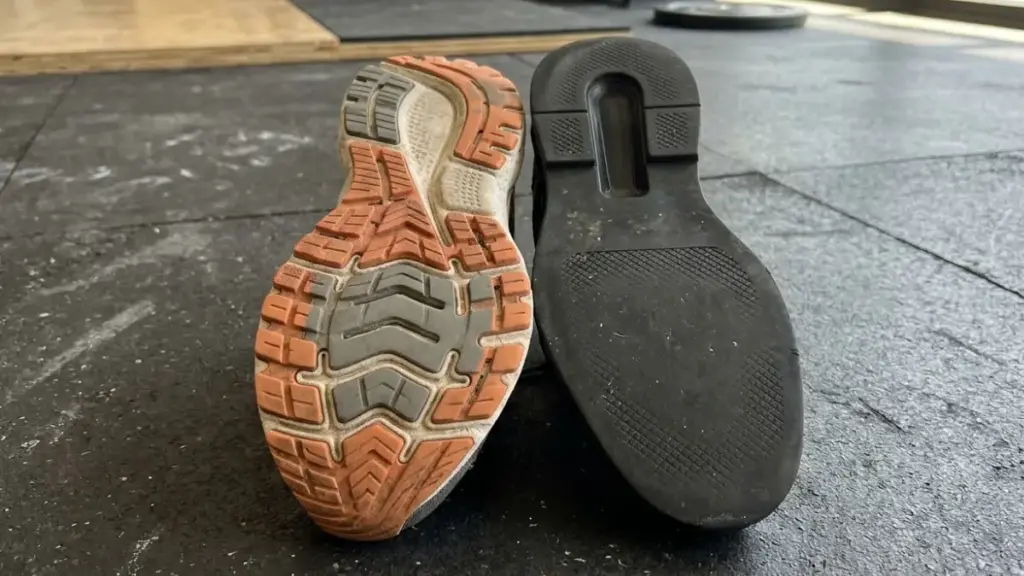
    best-gym-shoes-outsole-comparison
    Comparing soft running soles with flat, firm lifting outsoles.

    Can I squat in running shoes if I am only lifting light weights?

    Lifting light weights in running shoes reduces immediate risk, but it reinforces poor movement patterns. Spongy midsoles cause subtle foot wobbles even under light loads, preventing you from building a stable foundation as you increase weight.

    Are barefoot shoes considered the best gym shoes for all gym exercises?

    Barefoot shoes excel at deadlifts and kettlebell swings because they encourage natural foot mechanics and a flat stance. However, lifters with tight ankles often prefer raised-heel weightlifting shoes for squats to maintain a comfortable upright torso.

    best-gym-shoes-midfoot-strap-adjustment
    Midfoot straps secure the foot tightly inside rigid weightlifting shoes.

    How often should I replace my specialized training shoes compared to running shoes?

    Specialized lifting shoes last much longer than running shoes because their dense soles do not degrade quickly from impact. A quality pair of lifting shoes used strictly indoors can easily maintain its stability and performance for two to three years.

    Protecting Your Lifting Future with the best gym shoes

    best-gym-shoes-athlete-standing-confident
    Investing in flat, rigid footwear protects your joints and enhances lifting power.

    Upgrading your workout footwear is one of the most effective ways to prevent injuries and improve your strength performance. Soft running shoes belong on the treadmill, not under a heavy barbell. By switching to firm, flat footwear designed specifically for strength training, you protect your ankles, align your spine, and build a safer, stronger lifting foundation for years to come.

    PLEASE LEAVE A COMMENT TO SHARE YOUR FAVORITE THOUGHTS OR FOLLOW OUR BLOG FOR THE LATEST UPDATES.

  • Navigating the Rising Health Insurance Cost and Hidden Fee Increases

    Navigating the Rising Health Insurance Cost and Hidden Fee Increases

    Experiencing a 10% spike in your health insurance cost can throw any household budget into disarray. Driven by rising medical inflation, prescription drug price increases, and subtle shifts in coverage policies, policyholders across the country are suddenly facing unprecedented monthly premiums and unexpected out-of-pocket expenses. Fortunately, navigating the Affordable Care Act (ACA) Marketplace does not have to mean accepting lower quality care or paying exorbitant rates. 

    By uncovering hidden fee structures, leveraging Premium Tax Credits, and choosing the right metal tier, everyday consumers are taking control of their medical finances. This detailed breakdown reveals why costs are soaring and provides actionable strategies to protect your family budget from hidden health fees.

    The sudden 10% surge in monthly medical obligations represents a direct financial threat to working families, but taking immediate control through strategic plan restructuring is the single most effective defense against predatory rate inflation. Unchecked premium inflation combined with hidden deductibles rapidly erodes household savings if left unaddressed. Rather than passively accepting annual rate hikes, policyholders must audit their policy terms, recalibrate tax credit filings, and utilize specialized health spending accounts to insulate their monthly finances.

    Uncovering the Root Causes Behind Soaring Health Insurance Cost and Hidden Fee Risks

    Medical Inflation and Dynamic Marketplace Policy Shift Dynamics

    Healthcare price inflation continues to outpace general economic indices, directly driving up the average baseline health insurance cost for individual policyholders. Hospital systems face escalated operational expenditures, labor shortages, and rising supply chain expenses, which insurers offset by inflating annual consumer premiums. Furthermore, advanced therapeutic treatments and specialty pharmaceuticals enter the consumer market at premium price points. These combined financial pressures force insurance carriers to recalculate actuarial risk models, resulting in steep rate spikes across both individual and family coverage tiers.

    health-insurance-cost-man-analyzing-charts
    Analyzing macro-economic drivers behind rising consumer medical expenses.

    Policy adjustments within the Affordable Care Act Marketplace further alter baseline pricing structures each calendar year. Legislative updates affect federal subsidy thresholds, changing the net premium balance that households must pay out of pocket. As government contribution formulas fluctuate, middle-class consumers often experience sudden shifts in net monthly obligations. Understanding how federal subsidy calculations interact with state exchange pricing models allows policyholders to anticipate policy modifications before open enrollment windows close.

    Unmasking Stealth Financial Trapdoors Hidden Within Policy Fine Print

    Beyond rising monthly obligations, policyholders frequently encounter hidden structural fees that inflate overall health insurance cost burdens unexpectedly. Insurance carriers quietly adjust annual deductible amounts and modify co-insurance percentages within renewed contract terms. A plan featuring a stable monthly premium may quietly double its individual deductible, forcing families to shoulder thousands of dollars in medical costs before primary insurance benefits initiate during unforeseen medical emergencies.

    health-insurance-cost-contract-highlighting-hands
    Spotting out-of-pocket traps hidden deep inside policy fine print.

    Out-of-network service traps present another severe threat to family financial stability. Even when choosing an in-network hospital facility, individual attending physicians, radiologists, or anesthesiologists may operate under separate independent billing entities outside your insurer’s network. These surprise billing scenarios generate substantial balance bills that bypass standard coverage caps. Identifying network limitations early helps prevent catastrophic out-of-pocket liabilities resulting from ancillary medical service providers.

    Navigating the complexities of modern medical coverage requires consistent vigilance and informed decision-making. By taking control of your policy options, auditing hidden fee structures, and leveraging tax-advantaged savings accounts, you can successfully protect your family budget from an unpredictable health insurance cost environment.

    Ri

    Evaluating Core Structural Factors Directly Dictating Health Insurance Cost Metrics

    Navigating Metal Plan Categories on the ACA Exchange Market

    Selecting an appropriate Marketplace metal tier plays a pivotal role in managing your long-term health insurance cost exposure. Bronze and Silver plans offer lower monthly premiums but require significantly higher deductibles and co-payments when receiving active medical treatment. Conversely, Gold and Platinum plans demand substantial monthly financial commitments while offering robust coverage that minimizes point-of-service expenses during routine doctor visits or complex medical procedures.

    health-insurance-cost-laptop-plan-comparison
    Evaluating coverage trade-offs across Bronze, Silver, and Gold plan options.

    Misaligning metal tiers with actual household medical usage frequently leads to severe annual budget waste. Healthy individuals who rarely visit healthcare providers often overpay by selecting high-premium Gold plans, absorbing unnecessary monthly expenses. Conversely, individuals managing chronic conditions who opt for Bronze coverage often face overwhelming out-of-pocket costs due to massive deductibles. Balancing recurring monthly premiums against anticipated healthcare utilization ensures optimal financial efficiency across the entire coverage year.

    Structural Impacts of Medical Network Tiers and Pharmacy Formularies

    Insurance providers increasingly rely on narrow network structures to keep baseline health insurance cost rates competitive. These restricted networks limit policyholder access to specific regional hospital systems and medical groups, penalizing patients who seek care outside designated provider circles. While narrow networks lower monthly financial overhead, they restrict patient choice and increase the likelihood of accidental out-of-network service utilization during medical emergencies.

    health-insurance-cost-doctor-patient-consultation
    Reviewing medication formularies to prevent surprise pharmacy copayments.

    Prescription drug formularies represent another dynamic variable impacting total healthcare expenditures. Insurers frequently reclassify brand-name and specialty medications into higher pricing tiers, shifting substantial drug expenses directly onto consumers. A drug covered under a modest copay last year might suddenly require 50% co-insurance under a revised formulary schedule. Auditing annual medication lists against updated insurer formularies prevents costly surprises at the pharmacy counter.

    Read more: Crucial Hospital Hygiene Standards Every Inpatient Needs to Inspect

    Strategic Marketplace Frameworks to Optimize Coverage and Curb Expenditures

    Harnessing Premium Tax Credits and Household Income Projections

    Maximizing the ACA Premium Tax Credit (PTC) is the most direct method to suppress your net health insurance cost on the federal exchange. These sliding-scale subsidies lower monthly premium payments based on estimated annual modified adjusted gross income (MAGI). Accurately forecasting household earnings ensures families receive maximum financial assistance while avoiding costly tax reconciliation penalties at year-end.

    [ruby_related heading=”More Read” total=5 layout=1 offset=5]

    health-insurance-cost-income-tax-credit-calculation
    Calculating accurate household income projections for ACA subsidy optimization.

    Updating life changes and income fluctuations on the Marketplace portal throughout the year protects household liquidity. A reduction in working hours, sudden career transitions, or changes in family size directly alter subsidy eligibility metrics. Promptly reporting income updates adjusts your subsidy allocation in real time, preventing sudden premium jumps or unexpected tax repayment liabilities during annual tax filing cycles.

    Utilizing Health Savings Accounts and Flexible Spending Structures

    Pairing a High Deductible Health Plan (HDHP) with a Health Savings Account (HSA) provides a powerful triple-tax advantage that mitigates your overall health insurance cost burden. HSA contributions are tax-deductible, grow tax-free, and remain tax-exempt when withdrawn for qualified medical expenses. This dedicated savings vessel enables policyholders to cover deductible obligations using pre-tax dollars, reducing net out-of-pocket healthcare expenses.

    health-insurance-cost-hsa-paperwork-management
    Managing pre-tax medical savings accounts to absorb unexpected deductibles.

    Flexible Spending Accounts (FSAs) offer a complementary avenue for managing predictable medical expenses within a single plan year. Unlike HSAs, FSA funds are subject to use-it-or-lose-it restrictions, requiring precise annual budgeting for prescriptions, dental treatments, and vision care. Combining tax-advantaged accounts with disciplined healthcare budgeting transforms unmanaged medical liabilities into controlled, predictable tax savings.

    Read more: Understanding the Reality of Health Insurance Denial and Fighting Back

    health-insurance-cost-couple-open-enrollment
    Active comparison shopping during open enrollment to secure optimized rates.

    Actionable Tactical Steps to Avoid Hidden Billing Traps and Reduce Expenses

    Open Enrollment Audit Tactics and Provider Network Audits

    Active annual plan evaluation prevents passive policy auto-enrollment from quietly increasing your monthly health insurance cost rates. Insurance carriers regularly update rate schedules, provider directories, and medication formularies between policy years. Spending time during open enrollment to re-evaluate regional carriers ensures you do not remain locked into an outdated, overpriced plan structure.

    health-insurance-cost-itemized-bill-inspection
    Inspecting itemized hospital invoices for inaccurate medical service charges.

    Executing a thorough provider network check is essential before committing to any prospective plan option. Contact primary care physicians and specialist offices directly to verify active participation in specific Marketplace network tiers for the upcoming year. Relying solely on outdated online directories can lead to accidental out-of-network visits that dramatically elevate personal healthcare liabilities.

    Medical Bill Negotiation Strategies and Appeals Protocols

    Requesting fully itemized billing statements for hospital visits is a critical tactic for managing your total health insurance cost output. Medical billing departments frequently make administrative coding errors, charge for unrendered treatments, or double-bill for routine medical supplies. Auditing each line item against your explanation of benefits (EOB) sheet reveals discrepancies that can be disputed and erased from your balance statement.

    health-insurance-cost-phone-claim-appeal
    Navigating administrative appeal processes to challenge denied medical claims.

    When insurance carriers issue formal claim denials, leveraging the official appeals process offers a reliable pathway to reverse improper charges. Work closely with healthcare providers to assemble comprehensive medical necessity documentation, supporting peer-reviewed evidence, and detailed physician letters. Persistent administrative appeals routinely overturn initial claim rejections, saving policyholders thousands of dollars in unnecessary out-of-pocket medical debt.

    Frequently Asked Questions About Health Insurance Cost Management

    Why did my monthly premium increase even though my health status remained unchanged?

    General medical service inflation, insurer network recalibrations, and rising prescription drug costs force carriers to raise baseline rates across entire risk pools regardless of individual health status.

    health-insurance-cost-advisor-consultation
    Consulting a certified navigator to clarify annual premium rate adjustments.

    How do I verify my eligibility for ACA Premium Tax Credit discounts?

    Eligibility depends on your estimated household modified adjusted gross income (MAGI) relative to federal poverty guidelines, family size, and local baseline plan costs available on the official Marketplace portal.

    health-insurance-cost-subsidy-eligibility-check
    Checking income thresholds for federal subsidy eligibility calculations.

    What steps should I take if I receive a surprise out-of-network emergency bill?

    Leverage federal protections under the No Surprises Act, request an itemized billing invoice, notify your insurer immediately, and file a formal dispute if emergency facility fees exceed standard in-network cost-sharing limits.

    health-insurance-cost-online-dispute-filing
    Submitting a billing dispute form under federal emergency bill protection laws.

    Securing Long-Term Financial Stability Against Rising Health Insurance Cost Trends

    Proactive healthcare planning remains your strongest defense against unpredictable premium spikes and hidden industry fee structures. By thoroughly auditing policy fine print, accurately adjusting income projections for tax credits, and utilizing tax-exempt savings vessels, consumers can successfully insulate their household budgets from sudden medical inflation. Taking charge of your insurance coverage transforms a complex financial burden into a manageable, predictable household expense.

    health-insurance-cost-confident-policyholder-portrait
    Establishing long-term household financial security through proactive plan optimization.

    Continuous vigilance during annual open enrollment periods ensures your coverage continuously adapts to evolving family needs and economic conditions. Do not allow insurance carriers to dictate your financial security through passive auto-renewals and hidden fee increases. Educate yourself on network limits, audit itemized billings, and utilize every available legislative protection to maintain optimal healthcare coverage at a fair, predictable cost.

    PLEASE LEAVE A COMMENT TO SHARE YOUR FAVORITE THOUGHTS OR FOLLOW OUR BLOG FOR THE LATEST UPDATES.